Jenkins, William
c.1763-1844; e.m. 1789
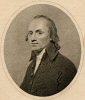

Jenkins was architecturally trained before entering the WM ministry. Initially going to Bedford he then ‘laboured most assiduously and earnestly in various important circuits. In Bedfordshire and Gloucestershire he was the instrument of introducing Methodism into several places which are now the heads of circuits. He afterwards travelled in Bristol, Stockport, Liverpool, Sheffield, and London.’ [Stevenson] where he was noted for his powerful preaching. In London he formed a close friendship with Adam Clarke ‘which continued in their respective families for half a century.’ [Stevenson].
At City Road he was involved in alterations to the building around 1800. While stationed in Sheffield he designed the new Carver St. chapel [1804-5]. ‘Its imposing five-bay façade is derived from Wesley’s City Road Chapel but with some differences’ [Wakeling], as was the interior plan (though with the communion table in front of the pulpit). This basic design, rooted in his own circuit experience, became a model not only for the chapels he was to design but more generally across the connexion. His chapels generally have a classically-styled five-bay façade with the central three bays (with a central porched entrance) usually slightly stepped forward and pedimented, often with a tablet denoting date or ‘Wesleyan Methodist.’
In modelling on the City Road chapel not only was this functionally suitable but in a time of repeated sub-denominational splits it gave a corporate connexional design identity and so linked societies and circuits across the country with the connexion’s key London chapel, built by John Wesley himself.
Jenkins retired from the itinerant ministry in 1810 because of ill health; he then practised as an architect from Red Lion Square, London. His churches include Bethel, Rochester (1810); St. Peter's, Canterbury (1811); Bondgate, Darlington (1812); The Mint, Exeter (1813); Waltham Street, Hull (1814); Bishop St., Leicester (1815); Walcot, Bath (1815-16); Gold St., Northampton (1816); Oxford (1817-18). In London he designed the original chapel at Hinde Street (1810), Great Queen Street (1816-17), Lambeth (1807), Southwark, Liverpool St.; Kings Cross. He seems not to have designed chapels after about 1820. The most complete surviving example of his chapels is probably that at Malton (1811). Jenkins’s influence can be seen in other chapels, perhaps most notably at Brunswick, Newcastle (1821), a prestigious building in a leading town, being copied directly from Jenkins’s designs for Waltham St., Hull.
Following a disciplinary hearing in 1842, Jenkins was suspended from the active ministry so did not have an obituary in the published Minutes of Conference. The obituary in the Wesleyan Methodist Magazine made no mention of his architectural work.
Mr Jenkins related that King George III, had, by his own desire, accompanied him to a Methodist class-meeting. He was a Secretary of the Itinerant Preachers Fund from 1806. A link to early Methodist work in Wales seems improbable.
His wife, Mary (c.1763-1838), from Northampton, ‘was brought out of the gay and fashionable world about 1788’, and became a class-leader in successive circuits.
His eldest son, William Wesley Jenkins (1793-1864) was in Athens in 1820 and exhibited views of buildings on the Acropolis at the Royal Academy in 1822, 1823, 1827. Also an architect, he was an unsuccessful competitor for new buildings at King's College, Cambridge in 1823 and is said to have come second in the competition for Westminster College, Horseferry Road (1853) and the English Wesleyan chapel at Carmarthen (1861-2).
A younger son, John Jenkins (1797-1844(?)), was an artist who travelled in France and Italy with William Hosking (1800-1861) who had been articled to William Jenkins in 1820. Together they produced Architectural and Other Ornaments, Greek, Roman and Italian (1827). John Jenkins was a surveyor as well as an architect and a trustee of the first Hinde Street chapel.
- WM Magazine, 1844 p.775; 1880, p. 278
- G.J. Stevenson, City Road Chapel and its Associations (1872) pp.548-49
- George W. Dolbey, The Architectural Expression of Methodism (1964) pp.177-78
- Howard Colvin, Biographical Dictionary of British Architects, 1600-1840 (3rd edition, 1995)
- Christopher Wakeling, Chapels of England (2017), pp. 74-80.
Occupations
Entry written by: PSF
Category: Person
Comment on this entry